
Green Technologies, Dirty Processes. The Paradox of Semiconductors
Chips are essential to smart systems and the digital tools behind the green transition but making them still depends on complex global supply chains and industrial processes that are hard to clean up.

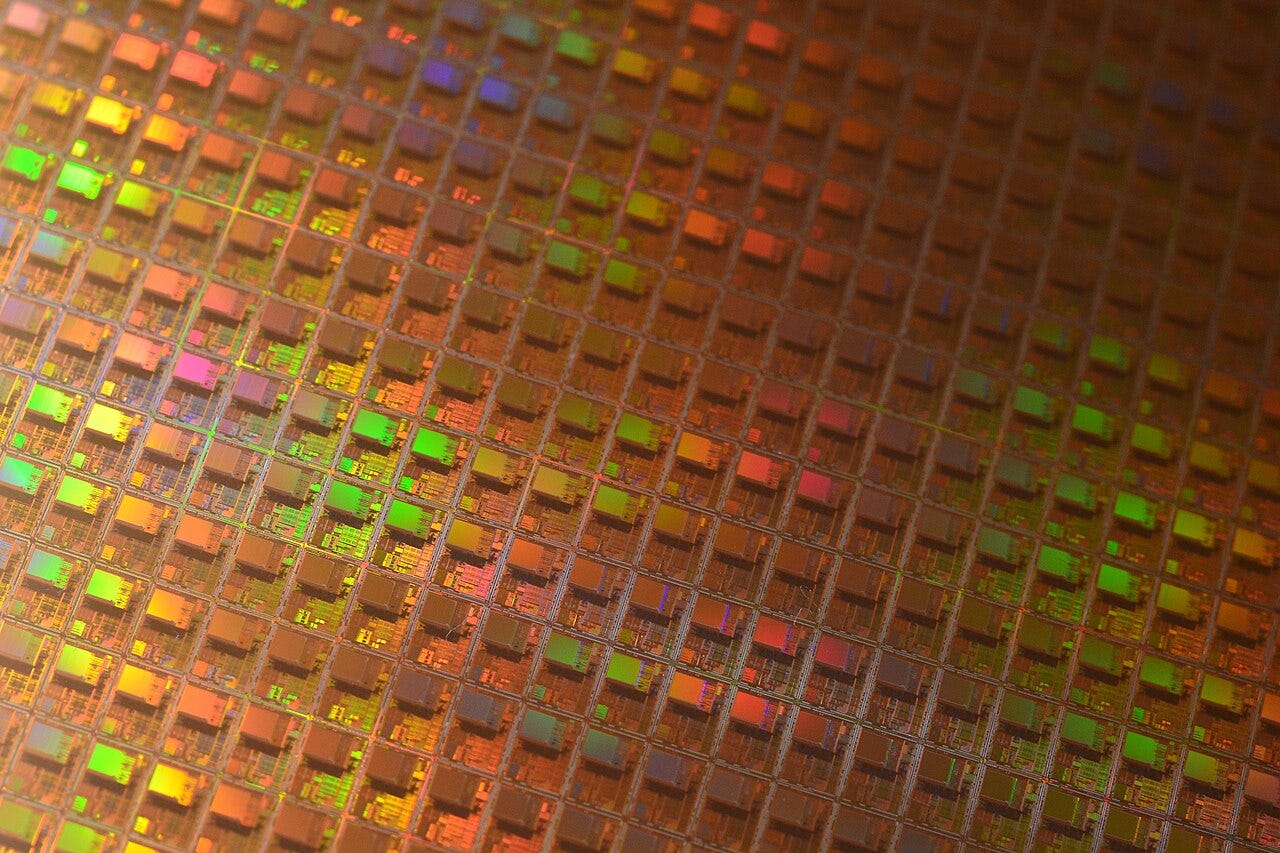
The release of persistent pollutants into water and the food chain, the production of greenhouse gases, the massive use of rare materials, limited lifespans, and mountains of waste: the semiconductor industry must reduce its environmental impact.
PFAS were the reason for my latest visit to CSEM in Neuchâtel a few months ago. This research centre presents itself as an internationally recognised Swiss innovation leader that develops and transfers disruptive technologies with high societal impact and multiple industrial applications.
“We need to find alternatives to the most harmful chemicals and rethink design and equipment to minimize waste,” says Erika Györvary, who heads European affairs at CSEM.
Györvary, who holds a PhD in chemistry and specializes in nanotechnology, is one of the key figures in the European research project Genesis, which brings together 58 partners from research, technology transfer, and industry in 12 countries.
The project is coordinated by the CEA-Leti institute in Grenoble, France. CSEM is specifically responsible for aspects related to “reducing dependence on harmful substances and the production of detection devices.”
The urgent need to diversify chip supply is advancing much faster than the effort to reduce the industry’s climate and environmental footprint.
On the one hand, the semiconductor industry enables greener technologies across sectors, such as electrification, smart systems, and digital solutions. On the other hand, it must also reduce its own environmental footprint.
This is a difficult goal for many reasons. The semiconductor industry is often described as the most complex industry in the world. Much of the equipment needed to design, produce, and distribute huge numbers of chips consists of large machines and highly complex processes that require hundreds of different chemicals and years of validation.
The challenge of eliminating PFAS from the electronics sector is significant. “We won’t be able to overcome it with this single project,” acknowledges Erika Györvary. But progress is nonetheless essential.
The European Union is considering a phased ban on PFAS, with exceptions for certain sectors. This is not the case in Switzerland, but parliamentary interventions are multiplying. The most recent was submitted by National Councillor Martine Docourt from Neuchâtel: she wants to ban ski waxes that contain PFAS.
The net is tightening as PFAS are increasingly detected in water, in the human body, and throughout the food chain. These molecules are permanently infiltrating the environment.
The problem with PFAS is that they are everywhere: under your skis, in your pots and pans, and throughout the entire production chain of electronic chips.
The same industry is therefore facing two forms of dependency at once: geopolitical dependence on long and fragile supply chains, and chemical dependence on substances that are increasingly difficult to defend environmentally.
Many regions of the world are trying to reduce their dependence on complex value chains, which can easily be disrupted in an unstable geopolitical climate. Part of the world is also aware that a very large share of chips comes from Taiwan alone. As a result, the US CHIPS Act and other programmes have started to support the construction of new factories and plan billions in investment.
These include TSMC factory projects in Texas and Germany. Intel is trying to become a serious contract foundry again.
In Japan, Rapidus is targeting 2nm logic semiconductors and aims for mass production in 2027.
In Europe, the Chips Joint Undertaking is a European joint venture, a public-private partnership launched to strengthen the semiconductor industry in Europe. It aims to stimulate research, innovation and production of electronic chips to ensure European technological sovereignty, with a budget of 4.2 billion euros for 2021-2027.
In all, the three-year Genesis project will receive financial support from the EU and Switzerland totalling €55 million.
Compared with the billions being spent on new factories, this suggests that the urgent need to diversify chip supply is advancing much faster than the effort to reduce the industry’s climate and environmental footprint.